

I would like thank Donia for her patience and consistent support during her time as my speech and language therapy clinical supervisor. It has been a highlight of my career to be supported clinically by Donia. She is very knowledgable in her field of expertise and shares this knowledge through fun learning methods to support the development of speech and language therapists. Donia is able to connect to those learning from her and is able to draw on their strengths to generate successful clinical practice. It was truly a pleasure to work under her clinical supervision in what was a challenging working environment. Her positivity and support as my clinical supervisor helped immensely and saw me eventually smiling through the many challenges faced as a speech and language therapist working abroad. Thank you.

Donia has an innate ability to connect with young children. This coupled with her outstanding professional abilities, and intuitive perception meant that we and our son could instantly trust her when she came to work with us. We cannot thank her enough for her work in guiding us as parents of a child on the spectrum and helping him become accepted by his peers and prepared for the challenges of secondary school.
Brilliant, insightful, and compassionate – Dr. Fahim wears the triple crown. In addition, her great gifts for strategy, and her belief in the possibilities of healing after trauma, make a winning combination. Our son has been working for an hour a week with Dr. Fahim over the last six months, and the difference is Night and Day. He tells us that for the first time in his life, he feels heard. Years of frustration over being unable to express himself, and to solve Other Mind problems, are evaporating. She is also teaching our family new ways of relating to each other; that past disasters do not have to be future ones. Though 2021 was the most difficult of years, Dr. Fahim’s presence has transformed our lives.
As a graduate student in Early Childhood Special Education at Hunter College, I had the privilege of having Dr. Fahim as a Professor. Her ability to translate her real world knowledge of children with special needs and her passion for helping children and their families prepared me for my career as a Special Educator. Dr. Fahim’s vast experience in the field of Autism, behavior and curriculum development informed my understanding of the field and helped to guide my practice with my students. If you have the chance to take a course or workshop with Dr. Fahim don’t think twice.
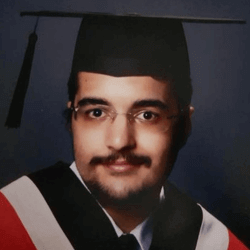
You made this come true, this is one of the many kids you helped. I will always be grateful to you and remember each small and big detail you helped me with. Show Karim’s journey to any mother who feels hopeless, there is light at the end of the road. Thanks to you and all the people who never gave up on him.
Through working with Donia, our son learned the power of verbal and non-verbal communication. All the interventions were 100% respectful of our son’s neurodiverse way of interacting with the world; we simply learned how to tweak our way of interacting with him, which seemed to unlock some very key skills. The interventions were fun, and we enjoyed them together as a family (our son has siblings). We are confident that he has solid building blocks for further learning, and we feel more confident as parents to help him achieve his future potential. Donia’s approach is evidence based, holistic, child and family centred; we have no hesitation in recommending her services.
Donia is an excellent clinician. Her years of experience were immediately evident during the assessment process where she was able to pick up on all the areas of difficulty, including the subtle difficulties overlooked by other clinicians. When therapy started, my son warmed to her immediately and thoroughly enjoyed the sessions with her, even noting how much he would miss her when the sessions came to an end. He has made significant progress with both speech and language and we have (and will!) wholeheartedly recommend her to other parents in need of a truly proficient speech and language therapist. Thank you.
Working with Donia was a true highlight of my career as a speech-language pathologist. She has a wealth of knowledge that she shared with me willingly and with talent. I always felt comfortable asking questions and seeking support from her because she knew how to provide the perfect combination of constructive criticism and encouragement. Not only was Donia a supportive mentor when it came to my work as an S-LP, she also helped me navigate the ins-and-outs of practicing internationally. She helped me grow from a shy, small-town clinician to a confident practitioner who is capable of providing services spanning from individualized therapy to large-scale professional development workshops. I will always be grateful to Donia for that.
Dr. Donia is one of the most kind hearted, amazing people that I have ever met in my whole life. She has helped me grow as a student and as a person. She has taught me life strategies that will help me in school, university, and later on in the future. I really enjoyed working with someone like her.
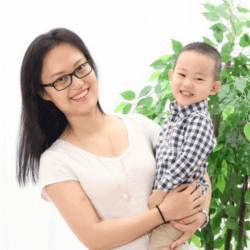
It is a great honor for me to have had the opportunity to work with Dr. Fahim to develop institutional training, parent training, and shadow teacher training for a special educational needs schools in China. Her profound knowledge base and professionalism astounded me, and at the same time, she is so approachable and understanding. Her flexibility and patience makes working with her so comfortable and efficient. She is so respectful in her willingness to learn about cross-cultural differences. I not only learned a lot of special education knowledge from her, but also learned how to be a wonderful human being helping kids and families conquer their difficult time periods. I am very much looking forward to the next cooperation.
Dr Donia Fahim has quite literally changed our lives in the most positive way. Before we met her we felt lost with no direction. Everyday was a struggle or fight and we had no support. Donia helped not just our son with his speech and behaviour but also our family in such a holistic way. She has advised us on all aspects of our son’s education, speech and behaviour - the massive improvement and confidence she instills is magical. She is one of a kind and and we will forever be grateful to her for how she helped us in some tough times.
I have been fortunate enough to be assisted by Dr. Donia to support a child with ASD. She is highly professional and extremely patient. I have learnt so much from her to help me monitor the progress of the child. She trained me to use one of the complex AAC systems but was able to make it fun and easy to use. The way she engages and interacts with the child is amazing and something I will continue using throughout my career.
Seldom is one privileged enough to be able to witness & observe the almost tangible synergy felt between a Therapist & their Client in a Session I had both the honor & privilege of working under Dr. Donia with one of her special little clients over a three-year period & there was never a day when he did not walk happily into her creatively welcoming "space" Dr. Donia's gentle, reassuring & quiet composure & her innate ability to tune into his demeanor & to "hear" his unspoken words, along with her unquestionable passion & dedication, ignited a relationship of trust to flourish & with these massive achievements & successes to ensue most importantly, ones that he was able to be taken from valuable session-time & transport them into his daily life & interactions. Proof indeed that when a child feels accepted, understood, heard & safe, they can and will begin to grow, "glow," & thrive Much love.
Seldom is one privileged enough to be able to witness & observe the almost tangible synergy felt between a Therapist & their Client in a Session I had both the honor & privilege of working under Dr. Donia with one of her special little clients over a three-year period & there was never a day when he did not walk happily into her creatively welcoming "space" Dr. Donia's gentle, reassuring & quiet composure & her innate ability to tune into his demeanor & to "hear" his unspoken words, along with her unquestionable passion & dedication, ignited a relationship of trust to flourish & with these massive achievements & successes to ensue most importantly, ones that he was able to be taken from valuable session-time & transport them into his daily life & interactions. Proof indeed that when a child feels accepted, understood, heard & safe, they can and will begin to grow, "glow," & thrive Much love.
I want to express my deep appreciation for the opportunity to meet you and witness your exceptional work firsthand. The positive impact you have on the children and the remarkable changes you facilitate is truly inspiring. I hold the utmost respect for you and your dedication, and I am grateful that individuals like you exist, advocating for children and going above and beyond to give their own voices. Thank you in advance for your assistance, and I hope to see you around in the future.
Donia, I believe you are the best person in this field, and you have done so much for my son's treatment. All the best to you.
You are the best, the most compassionate and empathetic provider I have ever met.